
Four surfaces. Dozens of products. One decision that affects every room in your home for the next twenty years. Choosing between marble, travertine, wood and concrete porcelain effects sounds straightforward until you are standing in a showroom under artificial lighting, holding a sample that looks nothing like it will once installed across 80 square metres of your Dubai living room.
UAE interiors operate under conditions that simply do not apply elsewhere. Intense sunlight shifts perceived colour, high humidity demands low water absorption, and temperature fluctuations require dimensional stability that natural materials often cannot deliver. This is precisely why wooden porcelain tiles have displaced real timber in premium bathrooms and why marble-effect porcelain now outperforms natural stone across countless high-end residential projects.
This guide cuts through that visual confusion. You will learn what each effect actually looks like once installed, which spaces suit each one, how UAE climate conditions interact with finish choices, and exactly what to examine on a physical sample before placing an order. By the end, you will have the practical framework to match the right effect to the right room with confidence.
What Porcelain Tile Effects Actually Are (And Why UAE Conditions Change the Equation)
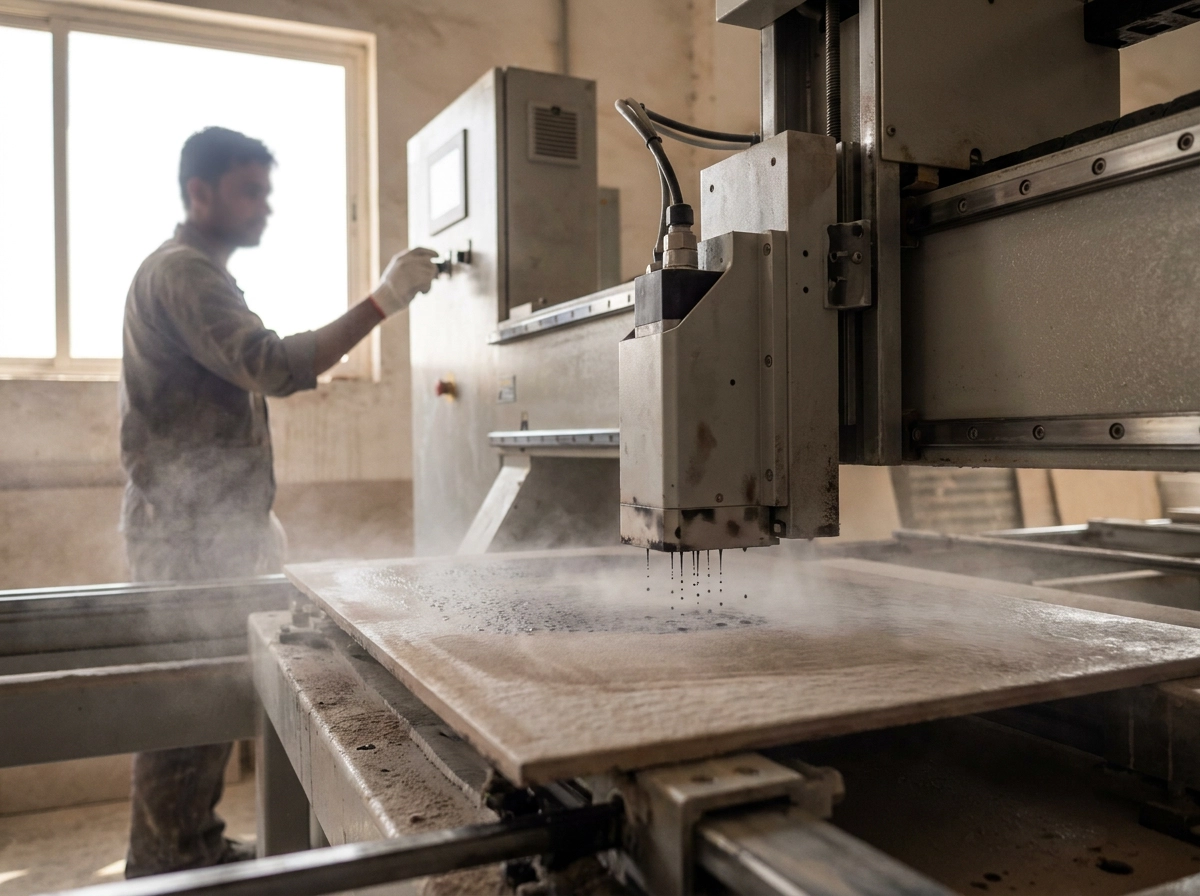
Porcelain tile effects are produced by firing high-resolution digital inkjet printing at extreme temperatures, bonding the decorative layer permanently to the tile body. The result is a surface that mimics natural materials while retaining porcelain’s structural properties: water absorption below 0.5%, along with thermal stability across the temperature swings UAE buildings experience daily. That combination matters because natural stone, timber, and raw concrete each carry vulnerabilities that these conditions expose.
The gap between a product photograph and an installed floor is larger than most buyers anticipate. Across 40 square metres of a UAE villa floor, directional light from floor-to-ceiling windows alters perceived tone; Gulf sunlight intensity shifts vein contrast; and the reflectance of white or pale walls changes how surface texture registers. None of this is visible in a showroom image or a small sample held under display lighting.
UAE conditions also stress materials in ways that are specific to this climate. Sustained UV exposure through unshaded glazing causes colour drift in natural stone and real timber over time. The sharp daily contrast between UAE outdoor heat and aggressively air-conditioned interiors creates expansion and contraction stress that degrades porous materials and wood joints progressively. Humidity differentials between coastal Dubai or Abu Dhabi apartments and desert-facing villa exteriors add a further moisture gradient that finish systems on natural materials cannot permanently resist. Well-specified porcelain effects handle all three without performance loss.
Choosing between effects is therefore a specification decision, not a styling preference. The finish type, tile format, and surface texture must perform correctly in a specific room, survive its cleaning regime, and still read as intended five years after installation.
This guide covers four effects: marble, travertine, wood, and concrete. Each addresses a different design problem in UAE premium residential projects. The sections that follow evaluate all four against identical criteria, so the right match can be confirmed before samples are ordered.
Porcelain Tiles with a Marble Look: What to Expect When Installed
Marble-look porcelain tiles replicate natural marble through high-resolution digital printing that captures veining patterns, tonal shifts, and crystalline surface variation. The distinction from quarried stone is worth understanding clearly: industrial production creates a controlled set of pattern variations within each batch rather than the completely unique veining of a natural slab. In practice, this is an advantage. When a tile is damaged and needs replacing five years after installation, a matching tile from the same range is obtainable. With quarried marble, that match is rarely possible.
Digital printing allows a sufficient range of pattern variants to minimise visible repetition across a typical room installation.
Light, Format, and Finish
Under the strong directional light common in UAE living rooms and master bedrooms, polished marble-effect porcelain intensifies vein contrast sharply. In large formats, 90x90cm or 120x60cm, fewer grout lines allow the veining to read continuously across the floor plane, producing high visual drama that smaller formats cannot replicate. Matte and silk finishes absorb rather than reflect light, delivering a softer result better suited to spaces where afternoon sun through west-facing glazing would otherwise create uncomfortable glare.
Where Marble Effects Work in UAE Interiors
Formal living rooms and entrance halls are the strongest application for Calacatta or Carrara-style marble effects, where the material communicates quality immediately. Master bathrooms benefit from running a single marble effect across the floor, shower walls, and vanity wall, creating wet-zone continuity that reads as intentional rather than assembled. Kitchen islands in a porcelain slab format achieve the high-end countertop appearance without the sealing and staining requirements that make real Carrara marble impractical in a cooking environment.
UAE Climate Performance
Natural marble is vulnerable to acid and alkaline cleaning agents and can be affected by coastal air over time; porcelain’s vitrified surface eliminates these vulnerabilities.
What to Check on a Physical Sample
Hold the tile at the angle it will be laid and introduce a directional light source replicating your window or downlight position. Assess whether the vein lines read as natural or repeat too visibly across tiles in the batch. Run a finger along the rectified edge to judge whether precision is sufficient for the minimal grout joint you intend. Wipe the surface with a damp cloth to see how fingerprints and water marks read on the finish before committing.
Porcelain Tiles with a Travertine Look: Texture, Warmth and UAE Applications
Where marble effects deliver formality and high contrast, porcelain tiles with a travertine look occupy different territory: warmer, more tactile, and deliberately less palatial.
What Travertine-Look Porcelain Actually Replicates
Porcelain travertine tiles reproduce the cross-cut or vein-cut patterning of natural travertine, including its characteristic pitted surface and tonal range spanning beige, ivory, and walnut. Natural travertine is a porous sedimentary stone that typically requires void-filling and periodic sealing, and its surface can be affected by acidic or alkaline contact. Porcelain travertine tiles carry the texture in the glaze, with a fully vitrified body beneath, eliminating the sealing, filling, and acid-sensitivity issues that make natural travertine impractical in UAE kitchens, bathrooms, and pool surrounds.
How It Differs from Marble Effects in a UAE Interior
The surface reads as warmer, more tactile, and less ceremonial, making it the stronger choice for spaces designed around a resort or biophilic ambience rather than a grand one. Covered outdoor terraces, pool surrounds, spa bathrooms, and villa compound reception areas all suit this material register in a way that polished marble effects do not.
UAE Climate Performance
The warm earthy palette responds well to the amber-spectrum artificial lighting prevalent in UAE residential interiors and reads correctly under warm afternoon sun through west-facing windows. Natural travertine exposed to direct Gulf sunlight shifts colour over time as UV breaks down its surface minerals. Like other porcelain tile effects, travertine-look tiles are fully vitrified and are not subject to the UV-driven colour shift that can affect natural stone surfaces over time.
Room-by-Room Suitability
Bathrooms gain spa-quality warmth from floor-to-wall continuity in a single travertine effect. Outdoor terraces and pool decks benefit from the anti-slip textured finishes this category offers. In open-plan villa living areas, travertine effects deliver warmth that marble effects, with their cooler crystalline palette, frequently cannot match.
What to Check in a Physical Sample
Under raking light, assess whether the relief texture reads as genuinely three-dimensional or merely printed. Confirm the filled-pore surface has no recesses deep enough to trap cleaning product residue. Check the R-rating or slip-resistance classification on any tile specified for outdoor or wet-area use. Finally, compare several tiles from the same batch: some buyers want near-uniform warmth, others need tonal movement, and the batch itself will tell you which this range delivers.
Wooden Porcelain Tiles: Where Real Timber Fails in UAE Interiors and Porcelain Takes Over
Where travertine delivers warmth through texture and tone, wood-effect porcelain addresses a different problem entirely: the desire for the residential quality of real timber in a climate that structurally defeats it.
Real timber flooring fails in UAE interiors for two reasons that no finish system resolves. First, the sharp daily contrast between UAE outdoor heat and aggressively air-conditioned interiors causes solid wood to expand and contract repeatedly, producing warping, gapping, and joint failure over time. Second, humidity differentials between coastal Dubai apartments and desert-facing villa rooms create moisture gradients within timber boards that work against the wood from the inside. Both failure modes are cumulative and irreversible.
What wood-look porcelain tiles actually replicate
Wooden porcelain tiles use high-resolution digital printing to reproduce the grain lines, knot patterns, and colour variation of specific species including oak, walnut, teak, and wenge. The porcelain body beneath is fully vitrified, with water absorption below 0.5%, meaning it will not expand, contract, warp, or fade under the sustained UV exposure that enters through the floor-to-ceiling glazing common in UAE villas and high-rise apartments.
Format and laying pattern
Plank dimensions determine how convincing the installed result reads. Plank-format wood-effect tiles are available in a range of elongated dimensions; longer formats reduce visible end joints and produce a closer approximation of real timber boarding. Laying pattern carries equal weight: a straight run reads formal and contemporary, brick bond delivers the familiar warmth of traditional boarding, and herringbone introduces pattern and direction that changes the perceived scale of a room. Confirm your intended pattern with a physical sample layout before ordering.
Room suitability
Master bedrooms are the primary application; porcelain tiles wood look provides the residential warmth of timber with none of its maintenance requirements. Bathrooms, en-suites, and steam rooms can carry the same wood-effect tile as the adjoining bedroom, creating a seamless transition that real timber cannot achieve. Outdoor-rated wood-effect porcelain extends the same material language to terraces and pool decks without UV fading or moisture damage.
What to check in your sample
Lay several tiles together and examine grain direction across the set to confirm the pattern does not cycle visibly within a typical room width. Assess the tile under both warm and cool artificial light; wood-effect surfaces shift perceptibly between colour temperatures. Run your hand across the surface to judge whether the embossed grain reads as tactile or uniformly flat. For any bathroom or terrace application, verify the slip resistance rating before confirming the specification.
Concrete-Effect Porcelain: The Industrial Aesthetic That Works in UAE Residential and Commercial Spaces
Where wood-effect tiles prioritise warmth and organic texture, concrete-effect porcelain occupies the opposite end of the aesthetic spectrum: raw, minimal, and deliberately industrial. The practical case for porcelain over real concrete is equally compelling.
Real concrete substrates are susceptible to thermal movement, and exposed concrete surfaces generally require sealing and ongoing maintenance to resist staining in busy environments. Once laid, concrete is effectively irreversible. Concrete-effect porcelain eliminates all of these constraints. The fully vitrified body requires no sealing, resists oil, cleaning chemicals, and surface wear, and can be lifted and replaced if the design brief changes.
Tonal range and finish options
The palette runs from light grey and warm greige through mid-tone slate to charcoal, anthracite, and near-black. Polished concrete-effect tiles read as gallery-floor sophisticated; matte and relief surfaces read as more authentically industrial and deliver better slip resistance for outdoor and commercial applications. This versatility makes concrete effects one of the most format-flexible categories in the porcelain range, performing equally well in residential and commercial contexts.
Where to use it in UAE interiors
Modern open-plan kitchens use large-format concrete-effect tiles (60x120cm or 120x120cm) across the floor and continued onto the kitchen island, producing a coherent poured-concrete aesthetic without grout lines interrupting the surface. Commercial lobbies and co-working spaces use polished concrete-effect slabs on walls and floors to create interiors that photograph well and age cleanly. Outdoor facades, pool surrounds, and covered parking structures use outdoor-rated concrete-effect porcelain where real concrete would crack, stain, or require resealing under Gulf weather conditions.
UAE climate performance
The neutral palette does not exhibit the yellowing or tonal drift some warm-toned effects show under sustained UV exposure. In coastal Abu Dhabi or Dubai properties, the vitrified body maintains surface integrity against salt air in a way real concrete cannot.
Inspecting a sample
Assess tonal variation across multiple tiles from the batch: excessive uniformity reads as artificial once installed, while excessive variation makes large floor planes look patchy. Examine the matte surface under direct light and check for any unintended sheen that contradicts the industrial intent. Confirm whether your chosen format (particularly 120x120cm) requires a specific levelling compound or substrate preparation, as large-format tiles are sensitive to substrate flatness in ways smaller formats are not.
Matching the Right Effect to the Right Room: A Practical UAE Reference
Each effect covered in the preceding sections earns its place in specific rooms. The table below translates that detail into a direct reference.
Entrance halls and formal living rooms call for polished marble-effect porcelain in 90x90cm or 120x60cm format, where fewer grout lines allow the veining to read across the full floor plane and the polished finish amplifies natural light in double-height villa spaces.
Master bathrooms and en-suites reward the total-look approach: marble-effect or travertine-effect tiles applied continuously across the floor, shower wall, and vanity feature wall carry enough visual complexity to anchor the room without additional decoration. Where the bedroom uses a wood-effect floor, extending the same tile into the en-suite on a slip-rated variant maintains visual continuity across the threshold.
Kitchens and open-plan dining areas benefit from concrete-effect large-format tiles as a neutral backdrop that does not compete with cabinetry or appliances. Where warmth is the design intent, travertine-effect tiles in a matte or natural finish introduce texture without the cool grey palette. A marble-effect porcelain slab on the kitchen island delivers the high-end countertop aesthetic at a fraction of the cost of natural stone, with no sealing requirement.
Bedrooms are well suited to wood-look porcelain tiles, which provide residential warmth without the air-conditioning and humidity vulnerabilities that affect real timber in UAE conditions. Lighter oak-effect planks laid in a brick bond pattern maximise warmth and residential character. Extending the same tile into the en-suite and onto the balcony via an outdoor-rated variant achieves the seamless material continuity that distinguishes premium UAE residential projects.
Outdoor terraces, pool decks, and covered balconies are served by all four effects in outdoor-rated formats with appropriate slip-resistance classification. Travertine-effect tiles remain the established choice for pool surrounds, their warm tones and textured finish consistent with resort precedent across the Gulf. Wood-effect outdoor porcelain suits contemporary deck terraces. Concrete-effect outdoor tiles fit minimalist villa exteriors and rooftop amenity spaces where a clean, unadorned surface is the design intent.
How to Evaluate a Physical Sample Before You Order: A Step-by-Step Checklist
Once you have matched the right effect to the right room, the physical sample stage is where that decision gets confirmed or corrected. These five steps make that process systematic.
Step 1: Replicate your room’s lighting conditions
Take the sample to the actual room. Hold it flat on the floor for floor tiles, or vertical against the wall for wall applications. Introduce a light source from the angle your windows or recessed downlights will deliver. Polished surfaces read entirely differently under raking light versus overhead light; a marble-effect tile that looks refined under a showroom spot can produce distracting reflections under the low afternoon sun of a west-facing UAE living room. This single step eliminates a significant proportion of regret decisions.
Step 2: Lay four tiles together
A single tile communicates nothing about pattern repetition at scale. Arrange four tiles edge to edge with your intended grout joint width held by a thin card or spacer. Assess whether the pattern repeat becomes visible, whether the tonal variation reads as natural or mechanical, and whether your planned grout colour integrates or creates a competing grid across the surface.
Step 3: Test with your actual cleaning product
Many common household cleaners are high-pH and would etch natural stone; applying your normal product to a sample tile confirms porcelain’s chemical resistance and reveals whether abrasive products cause surface changes over time. Apply your cleaning product to a concealed area of the sample, leave it for your usual dwell time, then wipe clean. This test can also reveal whether abrasive cleaners affect the polished finish surface.
Step 4: Assess the rectified edge
Run your fingernail along the tile edge. Warpage and edge deviation are recognised manufacturing variables that must remain within tight tolerances for minimal-joint installation. Tiles intended for 1.5mm or 2mm joints require significantly higher edge precision than those going in at 3 to 4mm. Poor rectification at narrow joint widths produces lippage that reads clearly under raking light.
Step 5: Request multiple tiles from the same batch
TilesMan supplies free physical samples that can include multiple pieces from the same production run. Assess the tonal and pattern variation across them. Check how many face versions the range contains; a wider set of decoration variants produces a more natural, less repetitive installed result across a full floor or wall.
Finish Options Across All Four Effects: How UAE Light and Climate Affect Each One
Once your sample evaluation is complete, finish selection becomes the next binding decision, and in UAE conditions it carries more consequence than in most markets.
Polished finishes on marble-effect and concrete-effect tiles deliver maximum light reflection and vein contrast, but polished surfaces highlight surface deposits more readily than matte or textured finishes, which is a practical consideration in dusty environments. In south or west-facing rooms receiving strong afternoon sun, polished floors also generate glare intense enough to make a space uncomfortable. Both problems are eliminated by moving to a matte or silk finish; the light drama is reduced, but so is the maintenance burden.
Matte and natural finishes perform consistently across all four effect categories regardless of UAE lighting conditions. They disguise surface wear and micro-scratching better than polished alternatives and are the recommended default for entrance halls, kitchens, and all outdoor applications. The trade-off is real: colour depth and vein contrast read with noticeably less intensity than in polished versions of the same design. For spaces where tactile quality matters more than visual drama, this is an acceptable exchange.
Silk and lappato (semi-polished) finishes occupy the middle ground. They offer more reflectance and colour depth than full matte, with less glare and fingerprint visibility than full polish. This makes them particularly well-suited to marble-effect and travertine-effect tiles in UAE master bathrooms, where ambient light is controlled by the design rather than affected by external sun angles throughout the day.
Relief and textured finishes are standard across wood-effect planks and strongly recommended for outdoor-rated travertine-effect and concrete-effect tiles going to pool surrounds, terraces, or covered balconies. Slip resistance (R-rating) increases with texture depth; verify the specific rating against any applicable UAE municipality or developer specification before ordering for commercial or hospitality projects.
One ageing consideration applies across all four effects. High UV intensity through glazing means long-term finish appearance depends heavily on maintenance practice. Matte and textured finishes age more gracefully under these conditions. Polished finishes may require periodic professional maintenance to retain their appearance, particularly under intensive cleaning or wear conditions.
Using One Effect Across Multiple Zones: Getting Total Look Continuity Right
Finish choices shape how a surface reads, but finish alone cannot deliver the premium, uninterrupted quality of a well-executed total look installation. That requires deliberate coordination of formats, orientations, and grout across every surface the eye touches.
Format variation is the mechanism that prevents total look installations from reading as monotonous. For marble-effect porcelain, specify the same vein series in different formats across floor and walls: a 120x60cm tile laid horizontally on the floor and a 60x120cm tile in portrait orientation on the walls create visual hierarchy without introducing a different material. On the feature wall, a bookmatch layout, where adjacent tiles are mirrored to create symmetrical veining, reads as custom stone work and justifies the entire scheme.
For wood-effect continuity between a bedroom and en-suite, the core specification challenge is safety, not aesthetics. The bathroom floor must carry a slip-resistance classification appropriate for wet conditions, but the bedroom tile does not. Most well-specified wood-effect ranges offer the identical design in both a standard and an R-rated textured variant. Confirm this availability before committing to the range; if the R-rated option does not exist within the same series, true continuity is not achievable without visual compromise.
Grout colour is consistently underestimated in total look specifications. A contrasting grout on a wood-effect plank floor fragments the board reading and draws the eye to the grid rather than the grain. A tone-matched grout on a large-format concrete-effect floor reinforces the seamless, poured quality the effect is designed to deliver. Travertine-effect tiles in a bathroom read most naturally with a warm sand or grey grout that integrates with the tile’s tonal range; bright white creates a grid overlay that contradicts the organic warmth of the material.
When a total look extends to an outdoor terrace or balcony, indoor-outdoor batch matching is non-negotiable. Outdoor-rated porcelain is typically thicker and more heavily textured than its indoor equivalent, and production batches for the two formats can differ in colour calibration. Request batch-matched samples of both the indoor and outdoor variants simultaneously before finalising the specification.
Choosing Your Effect: The Decision Before the Sample Order
Once the total look decisions are settled, the sequence that prevents regret is straightforward: function first, lighting second, samples in the actual room third.
Start with the functional requirements of the space. Slip resistance, UV stability, and chemical resistance are non-negotiable constraints, not secondary considerations. A south-facing terrace, a pool deck, and a steam room each impose mandatory performance thresholds that eliminate certain finishes before aesthetics are relevant. Identify those constraints first and you narrow the field to a workable shortlist rather than choosing from the entire catalogue.
Then assess the room’s lighting at its most demanding moment. That is typically direct afternoon sun through west- or south-facing glazing in UAE homes, or exclusively recessed downlighting in internal bathrooms with no natural light. Silk and matte finishes read consistently across both conditions and are the lower-risk default for UAE interiors where lighting varies significantly through the day.
Request physical samples and evaluate them in the actual room. Showroom lighting is controlled to present materials favourably; it will not replicate your afternoon sun, your recessed LED colour temperature, or your wall paint reflectance. Arrange a minimum of four tiles from the same batch edge to edge on the floor or wall and assess the pattern variation, tonal shift, and finish behaviour under your room’s real conditions.
TilesMan supplies free physical samples across its marble-effect, travertine-effect, wood-effect, and concrete-effect porcelain ranges, with product selection support available to homeowners, interior designers, and fit-out contractors across Dubai, Abu Dhabi, Sharjah, and the wider UAE.
The right effect is not the one that looks most impressive in an online photograph. It is the one that performs correctly under your specific lighting, survives your cleaning regime, and still reads as intended a decade into the installation.
Conclusion
Four effects, one material, and decisions that will outlast every other finish in the room. Porcelain delivers the aesthetic of marble, travertine, timber, and concrete without the maintenance liabilities that UAE conditions impose on natural alternatives. The right choice depends on three things: the room’s function, its lighting behaviour across the day, and the finish that performs under both.
If you are ready to move from decision to selection, request free samples from TilesMan across all four effect ranges. Support is available for homeowners, designers, and contractors across Dubai, Abu Dhabi, Sharjah, and the wider UAE. Start with the sample. Everything else follows from there.